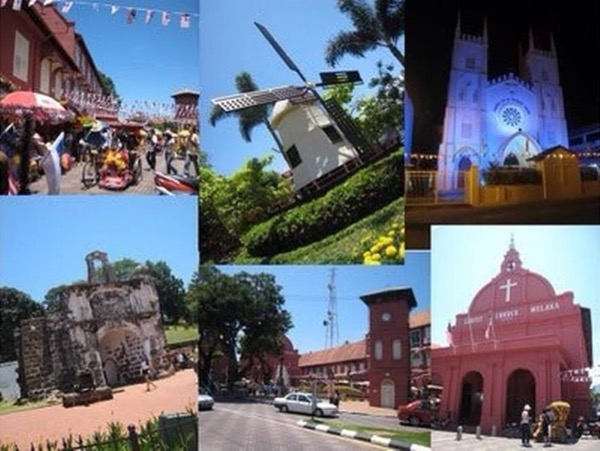

DUTCH EURASIANS OF MELAKA
The history of the Dutch Eurasians of Melaka is a story of a community forged in the colonial era, a tale often eclipsed by the more prominent Portuguese-Eurasian (Kristang) community. Their legacy is not in a distinct cultural language, but in their family names—a living link to the Dutch East India Company (VOC). Today, they are a small, dispersed community working to reconnect with their roots.
⚔️ Origins: The Dutch Conquest and Early Settlement
The Dutch East India Company (VOC) captured Melaka from the Portuguese on 14 January 1641, after a brutal siege. To monopolize the spice trade, the Dutch saw controlling the strategic Straits of Malacca as essential to neutralizing Portuguese power. Following the capture, many VOC employees, including sailors and merchants, remained. Intermarriage with local women was actively encouraged—sailors who wed local women even received extra pay—laying the foundation for the Dutch Eurasian community. Unlike the Portuguese who came before them, the Dutch were Protestant and had a different colonial approach, but their influence shaped the region for over 180 years.
🛡️ Survival and Assimilation Under Dutch Rule
The Portuguese-Eurasians (Kristang) who stayed after the Dutch takeover were initially marginalized. They survived by becoming agents for the Dutch, marrying Dutch officials, and converting to the new faith to secure their positions. Some even formed a "Brothers of the Church" organization for secret religious resistance. The Dutch ruled Melaka for the longest period of any colonial power (1641–1825) but preferred Batavia (Jakarta) as their regional center. Melaka's importance declined, but the community persisted.
📜 A "Forgotten" Legacy: Names as the Only Link
After the British took over (1824), many Dutch Eurasians assimilated, especially into the larger Kristang community. Today, a Dutch Eurasian's strongest link to their heritage is their surname. Families include:
· Common Names: De Witt, Westerhout, Van Huizen, Goonting, Hendriks, Hendroff, Jansen, Jansz, Marbeck, Minjoot, Spykerman.
· Less Familiar Names: Estrop, Overee, Scharenguivel, Tessensohn, Valberg, Van Buerle.
Unlike the Kristang with their vibrant Branyo music and unique creole language, the Dutch Eurasians have largely assimilated, with little to visibly distinguish them apart from their names.
🔗 Modern Reconnection
Today, the community is small (estimated 600–1,200 people) and scattered. Dennis De Witt, author and researcher, founded the Malaysian Dutch Descendants Project (MDDP) to help families reconnect. In 2004, they held their first international gathering in Melaka, and events like the Malakka Dutch Festival help keep the heritage alive, often featuring exhibitions of families like the Westerhouts and De Witts.
💎 Surnames: The Living Heritage
Ultimately, the story of the Dutch Eurasians is one of quiet assimilation, where a few hundred years of history is preserved in a family tree and a surname passed down through generations. They are a testament to the complex, intertwined colonial history of Melaka—a community that, while "forgotten" by mainstream narratives, continues to remember itself through its names.
The Dutch Eurasians Song
https://www.mureka.ai/song-detail/CB18MnxD2Z783GqYvmfHom?is_from_share=1&from_app=true

No comments:
Post a Comment