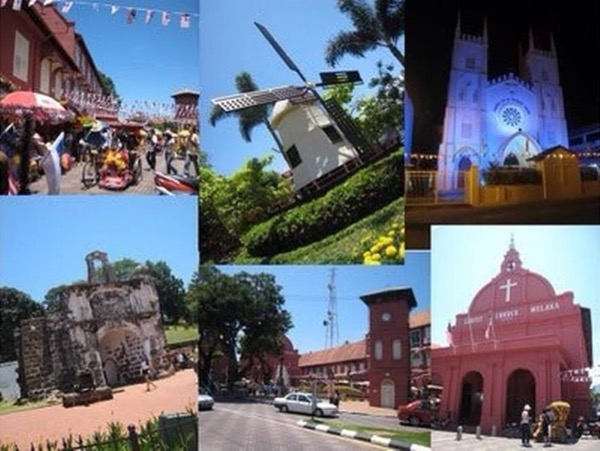
Tuesday, August 31, 2010

LCCT TERMINAL TO BE READY BY APRIL 2010

Tuesday August 31, 2010

PM launches mega low-cost terminal project

By MAZWIN NIK ANIS
mazwin@thestar.com.my


SEPANG: The opening of the world’s first mega terminal for low-cost carriers – to be known as KLIA2 – will mark the nation’s growth and leadership in aviation not only in this region but also the world, said Prime Minister Datuk Seri Najib Razak.

He said considering the exponential traffic growth in the low-cost sector, the Government had prioritised the immediate development of a terminal that would meet low-cost travel needs for the next 10 to 15 years.

The plan was a variation of the original KLIA Master Plan as low-cost travel and its extraordinary boom was not previously envisioned or anticipated.

were able to accommodate the low-cost carriers’ needs for the past few years at the current Low-Cost Carrier Terminal (LCCT),” Najib said at the project’s ground-breaking ceremony here yesterday.

“However, the time has come to revolutionise the airport terminal design for low-cost carriers and passengers in order to stay ahead of competition.”

The new low-cost carrier terminal is being built to handle 30 million passengers per year initially and has the flexibility to allow for expansion to cater for future growth and changes to the operational models of aircraft.

Landmark project: Najib signing a plaque at the ceremony in Sepang yesterday. With him are (from right) Kong, Malaysia Airports Berhad managing director Tan Sri Bashir Ahmad and chairman Tan Sri Datuk Dr Aris Othman.

Located 2km from the current Main Terminal building, KLIA2 will allow for easy inter-terminal transfer and better connectivity between the two.

The Prime Minister said KLIA2, targeted to be completed in April 2012, was expected to boost the nation’s tourism industry by attracting more airlines and visitors.

He added that the facility would increase tourism revenue from RM53bil last year to RM168bil in 2020.

In his opening speech, Transport Minister Datuk Seri Kong Cho Ha said the new LCCT would meet passengers’ expectations with built-in walkways, bigger space per passenger and total separation between arrival and departing passengers for improved security.

He added that the new terminal would have an integrated transport hub, connecting various modes of transportation such as taxis, buses and the Express Rail Link (ERL) service.

Kong said the aviation industry was undergoing a paradigm shift with the accelerating growth of low-cost carriers defining the future of air travel, especially in Asia.

Webmaster : We look forward to the completion of the new LCCT Terminal at KLIA. When completed, we expect more tourists to visit Malaysia in general and Melaka - World Heritage City - UNESCO in particular. KLIA 2 is just about 1 and a half hours from Melaka.

Monday, August 30, 2010

WAH AIK OF MELAKA

Tiny shoes for lotus feet

Raymond and Tony Yeo, the only Chinese bound foot shoemakers, give TANYA ABRAHAM an insight into the ancient custom of binding of women's feet and their business.


“Asking a woman about her bound feeT is akin to prying into her most intimate and private moments”


Now a souvenir: Raymond Yeo shows his wares.

Raymond and his brother Tony Yeo are surprised that I am an Indian. They have many questions about India and her strange customs. Like sati; it baffles them that a woman should give up her life for her husband. I, in turn, find it strange that the two men are Chinese bound-foot shoemakers. They laugh!

I am seated inside ‘Wah Aik Shoemaker', their tiny shop in Malacca amid a display of tiny shoes and newspaper cuttings on the walls. Both Raymond and Tony promise to educate me about their business and the custom of foot binding, in exchange for answers to their questions. I promptly agree; they, after all, are the only bound feet shoemakers left in the world today.

Status symbol?

It seems almost impossible that the Chinese woman of yesteryear could be without bound feet. It is like expecting to see an English woman without her corset in the 18th century. It was a sign of femininity; and a sensuous one too. “The smaller the feet, the more attractive it was for the man, thus getting her a wealthy and eligible groom,” explains Raymond between sips of Chinese tea. If on her wedding day the woman did not display the prized ‘Lotus feet', it was a sign of extreme disgrace and a poor show of her family's status.

Much of a Chinese woman's future depended on her marriage and, in turn, her feet. During the Sung Dynasty, (960-976 BC), dancers' desire for feet the size of a lotus flower was promptly copied by courtesans and upper class women: it became a symbol of social standing and the luxury of having not to work. Eventually the lower classes began imitating them, so much so that the bound feet became a status symbol.

Raymond reveals some details that intrigue me. He blows at the golden liquid in the cup clasped in his palms, his eyes fixed on the tea: “Asking a woman about her bound feet is akin to prying into her most intimate and private moments”. Chinese men attached a certain erotic value to the feet. If a man was allowed to touch a woman's lotus feet, it was a sign of approval, indicating that a relationship could be started between them.

I ask him about the women in his family: “Once the Chinese came to Malay, the tradition died a quick death. But there, of course, remained women who had bound feet, and others in Kuala Lumpur and Singapore as well. When my grandfather came to Malaca (from Hainin province in China) in the early 20 {+t} {+h} century, he found this shop was more lucrative than the coffee shop he initially started.”

Only producers

Women flocked from the most interior regions of Malaysia to pretty their small feet (it was only natural that the most beautiful shoes be chosen to adorn the most treasured part of their bodies), and once the last bound feet factory in China was shut down in 1998 (the custom was banned in 1912), Wah Aik Shoemaker became the only producers of the lotus feet or golden lily shoes.

The suffering and the pain were sometimes so intense that some could barely touch the ground for months on end. One woman, Raymond recalls, told of endless days of extreme agony, when she would cry to sleep every night. “She had her feet bound when she was four years old. Her mother used silk wrappings almost 20 yards long. This forced all her toes except the big one to go under the soles of her feet, upon which a heavy stone was placed. It eventually crushed the arch of her feet and broke the toes, pulling them towards the heel.” Raymond added the elderly woman, then 80 years old, visited his shop in a fancy car accompanied by an army of servants to choose the colours of silk for her shoes. “She was proud of what her suffering had gained her.”

That was more than a decade ago. And the only woman Raymond and Tony now know with lotus feet lives in Kuala Lumpur. Still the delicate shoes they make with extreme precision continue to have a market, “mostly with tourists, who buy them as souvenirs.” That is then carried away to lands afar, to keep alive stories of a 1000-year-old custom.

MELAKA HOSTS 4.89 MILLION VISITORS BY JUNE 2010

elaka gets 4.89 mil tourists as of June
Sunday, August 29th, 2010 12:36:00
MELAKA: A total of 4.89 million tourists, 21 per cent of them from abroad, visited Melaka as of June this year, said state Tourism, Culture and Heritage Committee chairman Datuk Seet Har Cheow.
He said the figure was encouraging in the state's endeavour to achieve its target of getting 8.2 tourists by the end of this year compared to 8.9 million last year, of which 18 per cent from abroad.
He said most of foreign tourists, who visited Melaka, were from Singapore, China, Indonesia and Vietnam.
Tourist arrivals in Melaka will increase dramatically if there are more direct flights between Melaka and other countries, he said, adding that the state government was holding discussions with Chinese and Thai authorities on the proposed direct flights between Melaka and Nanjing and Melaka and Hadyai.
He said the upgrading work of refuelling facilities at the Melaka International Airport would be completed in December to enable it to accommodate wide-bodied aircraft such as Boeing 737.
The upgraded airport will be a catalyst to the Melaka tourism industry, he told reporters after delivering a speech before the breaking of fast with the media and orphanages organised the Melaka chapter of the Malaysian Association of Tour and Travel Agents in Ayer Keroh here last night.
On anti-Malaysia protests in Jakarta, he said it had not affected tourist arrivals from Indonesia and Malaysians visiting the republic from the state.

Friday, August 13, 2010

EX-SAILOR LOVES FOR MALAYSIA

Friday August 13, 2010

Ex-sailor exhibits his life-long love for Jalur Gemilang

By MARTIN CARVALHO
malacca@thestar.com.my


MALACCA: His life-long love for the Jalur Gemilang started when he sailed around the world in ships bearing the Malaysian flag.

Now 51-year-old Mohd Aboo Baker Yaakob has turned his family home into an expression of his patriotism.

Mohd Aboo, a former sailor with MISC Bhd, has diligently braved the elements every August since 2006 to decorate his family home in Kampung Morten with the Jalur Gemilang, including painting the entire roof with patriotic motifs.

“I love my country and was proud to sail around the world for 12 years in ships carrying the Malay-sian flag.

“Because of this I started a yearly family tradition of decorating and painting my entire home with the Jalur Gemilang and representations of Merdeka,” he said.

The only one: Mohd Aboo (left) and his son Zaeed putting the final touches to the roof decorations.

Mohd Aboo said it was a challenge to get the work completed with the fasting month falling in August.

“I started decorating and painting about a week ago and managed to complete it just in time for the first day of fasting,” he said, adding that he spends an average of RM1,000 on paint and other paraphernalia.

This year, however, he spent more than RM2,000 as he used better quality paint.

“It is not only 1Malaysia but the only one in Malaysia,” Mohd Aboo said proudly while putting the finishing touches to his roof.

Mohd Aboo, whose family home is located in the historic city’s only protected heritage Malay village along the banks of the Malacca River, said he hopes his 19-year-old son Zaeed Mohd will continue the tradition.

“It is hard to find others willing to help as they have to spend hours up on the roof under the sun.

“Luckily, my son seems interested,” he added.

One of his proudest moments was when Prime Minister Datuk Seri Najib Tun Razak stopped to take photographs of his home during a walkabout at his village in February.

Friday, July 23, 2010

OLD IS GOLD FOR MELAKA AND PENANG

Saturday July 24, 2010

Malacca and Penang: History in abundance

THE REAL ESTATE WITH ANGIE NG
angie@thestar.com.my


THE saying ‘Old is Gold’ certainly holds true for many things.

Among the things that appreciate over time are family relationships, friendships and the value of some tangible things like real estate.

Many so-called “city folks” in Kuala Lumpur and Petaling Jaya actually do not hail from the city; their hometowns are in other parts of the country.

Home is where the heart is and many of us have set up homes in places where we work, after settling down with our own family, and have children attending schools or colleges in the city.

The Malacca government has turned the once old and quiet Jonker Street into the now vibrant and ‘happening’ Jonker Walk.

With passing time and wisdom, we learn to appreciate our loved ones better.

And despite the “rat race” of city life, it is important to stay connected with our loved ones and old friends back in the kampung or in other places.

Likewise in the built environment, we can find many undiscovered gems around, which, in spite of their old physical exterior, are actually hidden treasures with strong history and many untold stories within their walls.

The first thing that comes to mind is the many pre-war houses and buildings that can be found in large numbers in the inner cities of Penang and Malacca.

Despite being old and dilapidated, many have the potential to be restored and given a new lease of life.

Some of the ways to reuse these buildings and “monetise” them include turning them into museums, heritage hotels, alfresco dining and restaurants specialising in local fares.

It is interesting to compare Penang and Malacca as they share many similar traits and history.

Both will benefit by learning from each other new ways to improve and manage their built and unbuilt environment.

Since my other half is a Malaccan, I must admit that I tend to compare my hometown, Penang’s George Town, with Malacca whenever I’m back for holidays or family events.

After all, both have been declared Unesco World Heritage Sites and have many interesting buildings and structures that are reminiscent of their rich history and heritage.

Penang and Malacca are both former Straits Settlement states with a long history of early settlers from various parts of the world converging there for trade.

And both are renowned for their Baba/Nyonya culture and heritage.

Being port states, both also have strong foreign connection and influence.

Penang was a bastion of trade for the English and the East India Company after it was founded by Captain Francis Light in 1786, while Malacca was a confluence of Portuguese, Dutch and English influence.

Those influences can still be clearly seen in the architecture of the buildings today.

It is evident that both Penang and Malacca have their own distinctive assets and attractions that have endeared them to many loyal visitors who throng the cities in droves whenever there is a long stretch of holidays.

This could be one of the reasons for the traffic-choked roads during the holiday season and major festivities.

It is common to find many outstation cars among the long lines of cars on the roads during such times.

To give a boost to their intrinsic value as natural tourist attractions, there is a need to improve the public transport system in the two heritage cities to ensure that the different modes of transport are well integrated and connected to each other.

Being on the radar screen of tourists is one thing, but it is equally important to ensure that visitors have convenient access to a good public transport network.

More should also be done to further boost the alluring old world charms of these cities while at the same time, revitalise the inner cities and keep them alive as living heritage.

To achieve this, the old and new attractions and facilities should co-exist and blend seamlessly with one another to make them relevant and refreshing to the people.

Malacca has made some interesting headway in this regard with many old buildings and “once quiet” historical enclaves being given a new lease of life.

One just needs to hop over to the happening and vibrant Jonker Walk, which comes alive every evening, teeming with traders and visitors.

Penangites can certainly take a leaf from their Malaccan counterparts to liven up George Town’s dilapidated inner city.

Deputy news editor Angie Ng is keeping her fingers crossed that the old and new charms of our cities will be the pride of our present and future generations

Thursday, July 15, 2010

WINGS AIR TO FLY INTO MELAKA INTERNATIONAL AIRPORT


Wings Air start operation at Melaka Airport

July 13, 2010

This is the second Airlines operating in Melaka for the new airport. Wings Air using Brand new aircraft (ATR72-500) fly into Melaka from 9 July 2010.

Schedules are :-

Pekan Baru (PKU) 1025 Melaka (MKZ) 1215Melaka (MKZ) 1245 Pekan Baru 1235
Daily flight from Pekan Baru – Melaka – Pekan Baru but with Wings Air you can Connect to Jakarta : Depart Pekan Baru at 1440 and Arrive Jakarta (JKT) 1620.

Price for one way Melaka – Pekan baru is RM214.

The ATR72-500 have a capacity of 72 Economy Class Seating. More info about Wings Air here.
Introducing this new Wings Air can enhance key area like tourist arrival from Indonesia, people that want to seek Medical attention in Melaka and Indonesian students.

Near future other possibilities of new airlines are Eastern Airlines from Nanjing China and Royal Brunei Airline.

Webmaster: All Malaccans must now work harder to get more flights into Melaka International Airport. The newly renovated and extended airport can now accomodate full Airbus 320 and Boeing aircrafts. Special charter flights can be organised into Melaka.

Sunday, July 4, 2010

MELAKA RIVER MONORAIL & MINI ROLLER COASTER


Melaka 1.6 Monorail from Taman Rempah to Hang Tuah Station at Jalan Bunga Raya are expected to be completed by September 2010.

Besides the Hang Tuah Station that is being built near to the former Cathay Cinema is a Mini Roller Coaster.

The Monorail track is about to be completed while the Hang Jebat Station at Taman Rempah has been completed.