The 294-room Ramada Plaza Melaka Hotel or Ramada Plaza by Wyndham (previously known as the Renaissance Melaka) has announced it will cease operating on June 30. -Pic source from Ramada Plaza Melaka hotel’s web
KUALA LUMPUR: A five-star hotel in Melaka has become the latest casualty of the Covid-19 pandemic.
The 294-room Ramada Plaza Melaka Hotel or Ramada Plaza by Wyndham (previously known as the Renaissance Melaka) has announced it will cease operating on June 30. No indication has been given on how many workers will lose their jobs.
The hotel is independently owned by MTB Sdn Bhd and operated under a management agreement with Wyndham Hotel Group Asia Pacific Co Ltd.
MTB Realty Sdn Bhd has notified the National Union of Hotel, Bar and Restaurant Workers of Peninsular Malaysia of its intended closure in a letter dated April 28.
"Due to the Covid-19 pandemic since January 2020 and the Movement Control Order since March 18, the hospitality industry has been extremely impacted and we are no exception," the companies directors Yang Pang Chee and Yeo Pang Kheng said in the letter.
"As a result of the crisis, the continued operation of the hotel is no longer viable. It is with sincere regret that we wish to inform that the owners have now decided to close the business of the hotel indefinitely."
They said the company will serve a two-month termination notice as per the collective agreement of the contracts of employment to the affected employees.
Their last working day will be June 30, and the company has said it will be paying out termination benefits as per the employees' contracts of employment.
The hotel, which is located in the centre of Melaka town along Jalan Bendahara, has been in operation since 1981.
The Sungai Malacca waters are serenity personified as five weeks of movement control order appeared to have brought calm, and restored cleanliness, aided by the absence of boats which ploughs this route with tourists onboard. — Bernama
The Sungai Malacca waters are serenity personified as five weeks of movement control order appeared to have brought calm, and restored cleanliness, aided by the absence of boats which ploughs this route with tourists onboard. — Bernama
The Sungai Malacca waters are serenity personified as five weeks of movement control order appeared to have brought calm, and restored cleanliness, aided by the absence of boats which ploughs this route with tourists onboard. — Bernama
A check by Bernama at several locations, especially near the Stadthuys building and Jonker Road, showed that the river has not achieved this level of cleanliness for a long time.
Before the MCO to curb the spread of Covid-19 was implemented on March 18, Malacca River’s water was murky and its colour was like ‘teh tarik’.
Trishaw rider Joseph Oliveira, 54, smiled when he was shown pictures of a rejuvenated Malacca River which went viral recently, saying he has not seen the river this clean in his eight years of working in the area
“Maybe photographic techniques made MalaccaRiver clearer than it really is. The water is cleaner during MCO due to lack of activities in Malacca River. Previously, it was very busy with boats plying the river, causing its water to be murky,“ the Kampung Portugis resident told Bernama.
Oliveira said Malacca River was stinking black in the 80s and 90s, but the state government especially during the time of former chief minister Tan Sri Mohd Ali Rustam had rehabilitated the river in a bid to turn it into the “Venice of the East”.
“A cleaner Malacca River is good for the environment. It can also help people like me to earn some money when it is a tourist attraction. For me, let the river rest for a while and it will help us back after this,“ he said.
Echoing his sentiment was cleaner Salim Bachek, 48, saying there had been a noticeable drop in activities in the river and the surrounding areas.
“Other workers and I used to remove a lot of garbage from Malacca River but during the MCO there is not so much rubbish. However, the public should not bathe or wash their feet with the river water because it is not as clean as swimming pool water,” said Salim, who hails from Bachang.
Mohd Ali, the person responsible for giving a new lease of life to Malacca River, was also excited with the development and urged the people to keep the river clean for future generations.
“It (Malacca River) is cleaner now, especially in town areas where we can see fish swimming in it. But if we do not maintain it, the river will become dirty. We must keep Malacca River clean,“ he said.
Meanwhile, on Facebook, many netizens gave feedback on the state of Malacca River, with some proposing measures to keep it clean.
Muhammad Arif Hishammudin said those who dumped garbage in the river should be fined while Ricky Ricardo Marcello noted that the current hot weather had led to no fresh water entering the river.
Many also shared their good experiences of seeing various animals such as monitor lizards in the river, a fact corroborated by Bernama’s checks.
A check with the Malacca River and Coastal Development Corporation showed that the Malacca River Cruises have been halted during the MCO. — Bernama
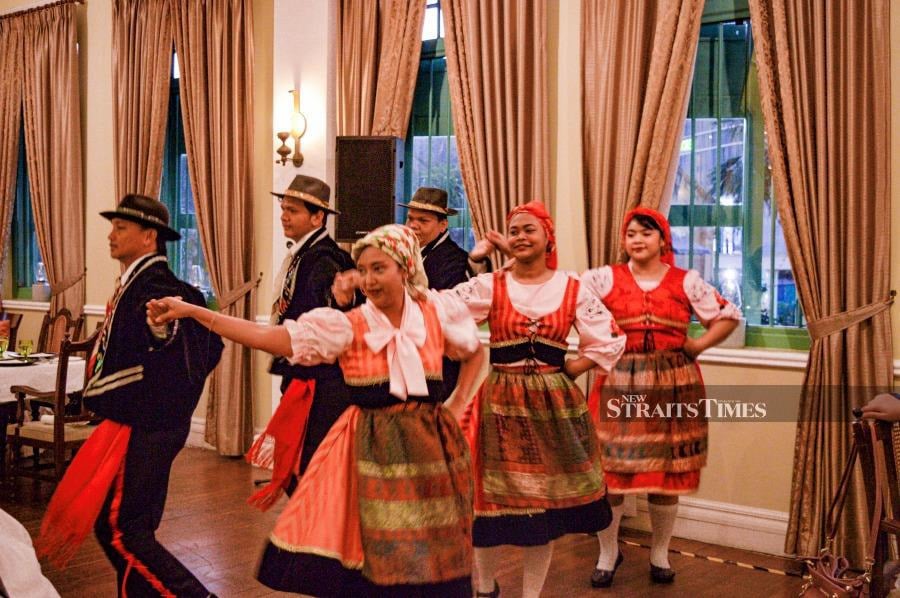
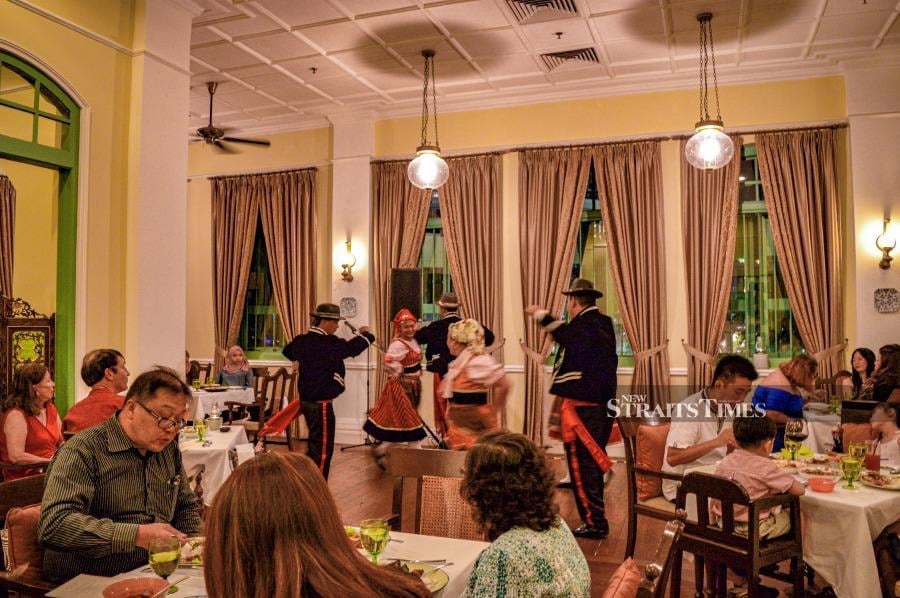
LIKE a blur, they twirl, joyous in their movements. The air in the otherwise sedate The Mansion restaurant crackles with merriment as the colourful Kristang dance troupe, Dommarina, from the Portuguese Settlement in Ujong Pasir, Melaka swirl and stamp to the mid-tempo Branyo, a dance originating from the Portuguese folk dance, Corridinho from Algarve in southern Portugal. Around them, the diners, who’d hitherto been tucking into classic Kristang dishes from a menu crafted especially for Kristang Night, a monthly night of heritage (which also includes an artisan market of local crafts and Kristang delicacies) organised by the hotel as a taster leading up to the grand celebrations of The Majestic Malacca’s San Pedro’s Night on June 27, look on, transfixed by the evening’s spirited entertainment.
Dine and dance.The Festa San Pedro or Feast of St Peter, which honours the patron saint of fishermen, is a major event in the calendar of the Melaka Portuguese or Kristangs, a community comprising descendants of early Dutch and Portuguese settlers who married the local people of Melaka in the 16th and 17th centuries.
The significance of the Feast harks back to the days when fishing was the main source of livelihood for the settlement's residents and those living at Praya Lane and Kampong Bandar Hilir. Back in the 1930s and 1940s, most of the adult population were involved in the fishing industry. The story goes that before these fishermen ventured out to sea, they’d pray to St Peter to bless them with a good catch.
Every year, both locals and visitors would converge on the settlement to join in the celebrations, which would feature, among other things, lively cultural performances, entertaining stage shows as well as a slew of traditional games. Candles would also be lit by the residents as a symbolic gesture for the fishermen, guiding their path out to sea or as they sailed home.
A FUSION FEAST
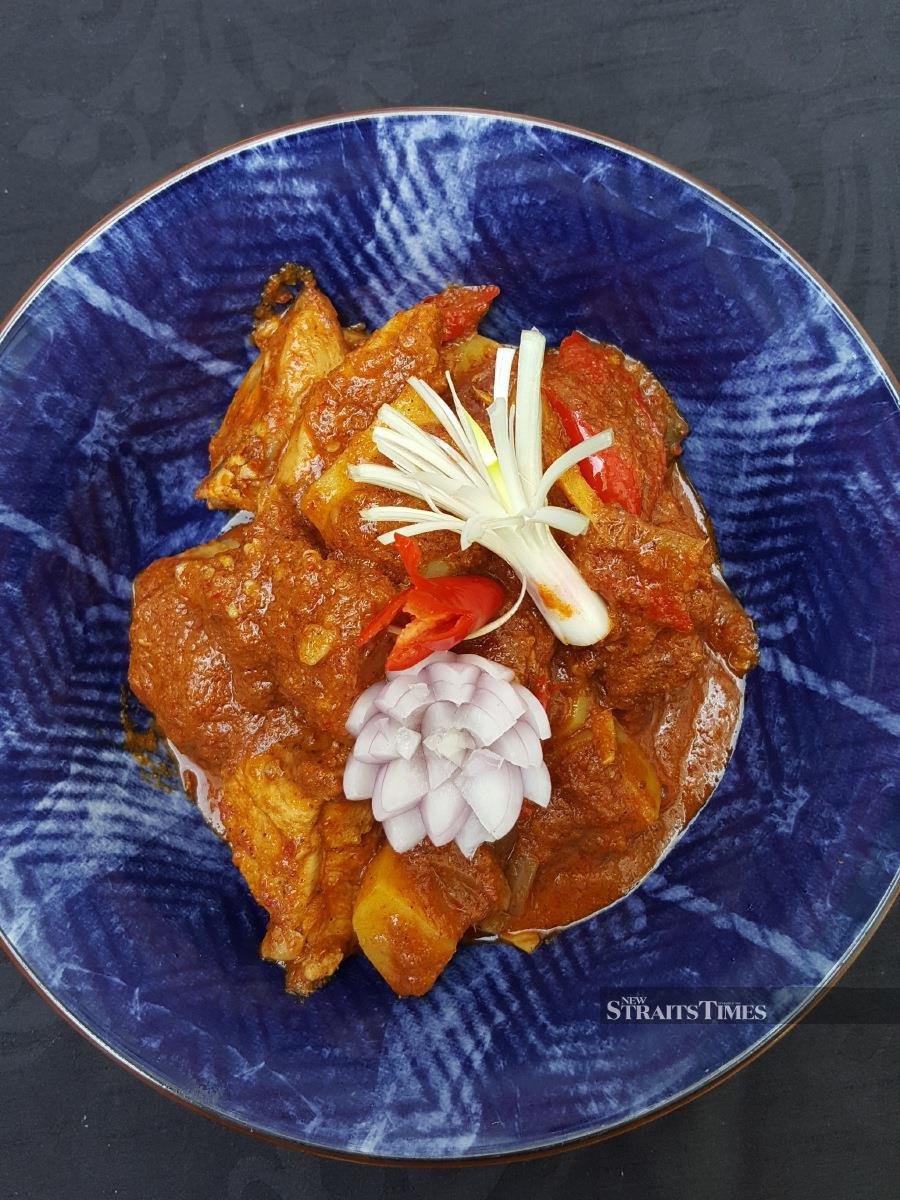
The famous Kari Debal.
Reluctantly tearing my eyes away from all the dancing and music, I turn my attention to the veritable feast that’s gradually building up on my already heaving table. Outside, the sky has turned a magical shade of mauve and the leaves on the trees ripple gently from the soft caress of the late evening breeze.
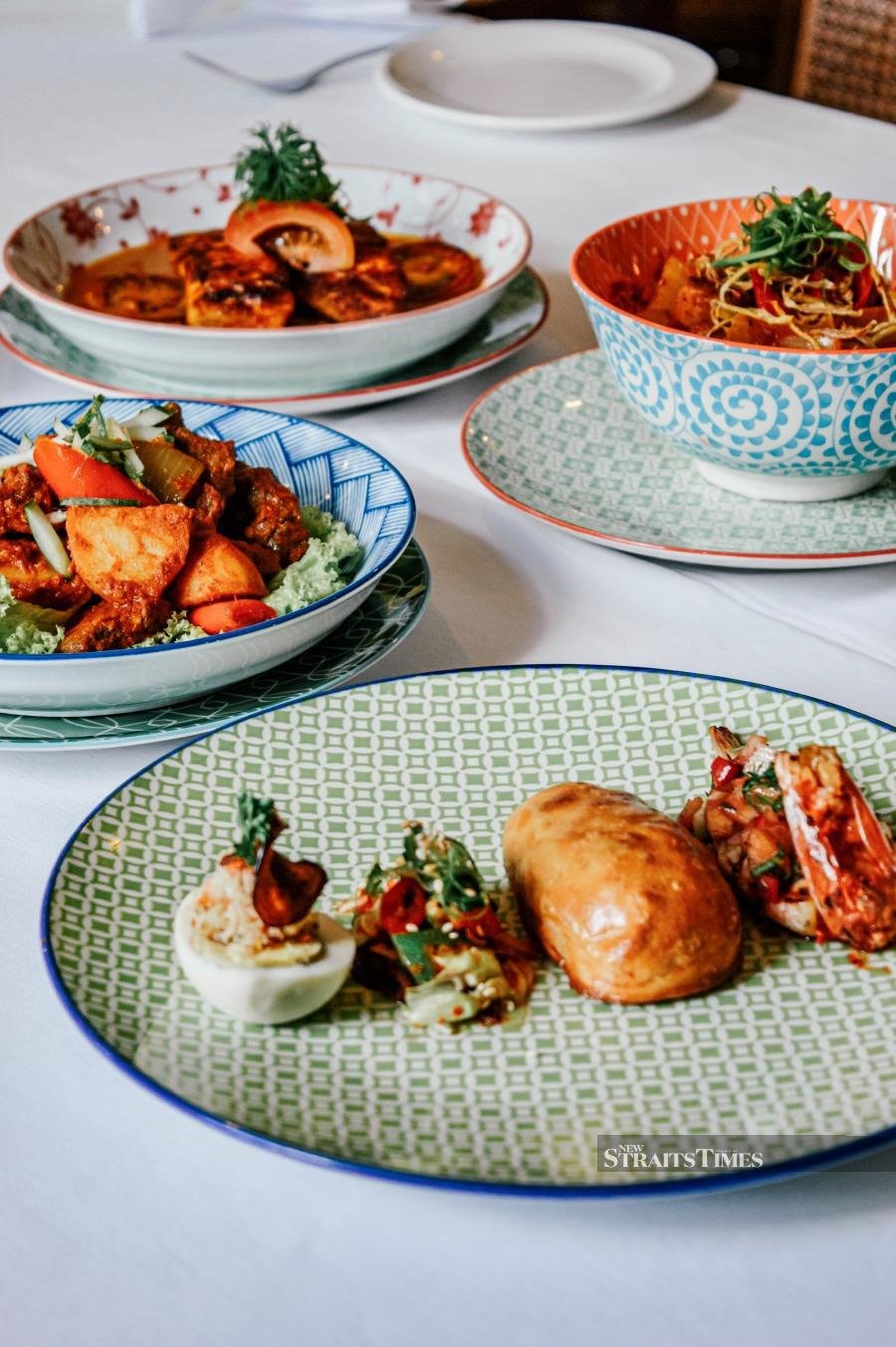
“Kari Debal (Devil Curry), Kari Seccu (slow-cooked beef and potatoes in a dry Portuguese curry), pan-fried omelette infused with fermented shrimp, onion and chilli... I recognise these. Oh wait, what’s the fish?” I muse to myself, recalling some of the signature items which I’d noted from the restaurant’s Kristang-inspired menu earlier at lunch. The other dishes on the table I’ve yet to try but certainly am looking forward to sampling.
Kristang spread.
‘Don’t forget to try the fish ya? It’s the Pesce Pargo Molee,” says a deep voice, slicing into my contented reverie. Well, if it isn’t the dashing Alvin Kessler, Comprador of The Majestic Malacca, I recall, throwing him a smile of recognition.
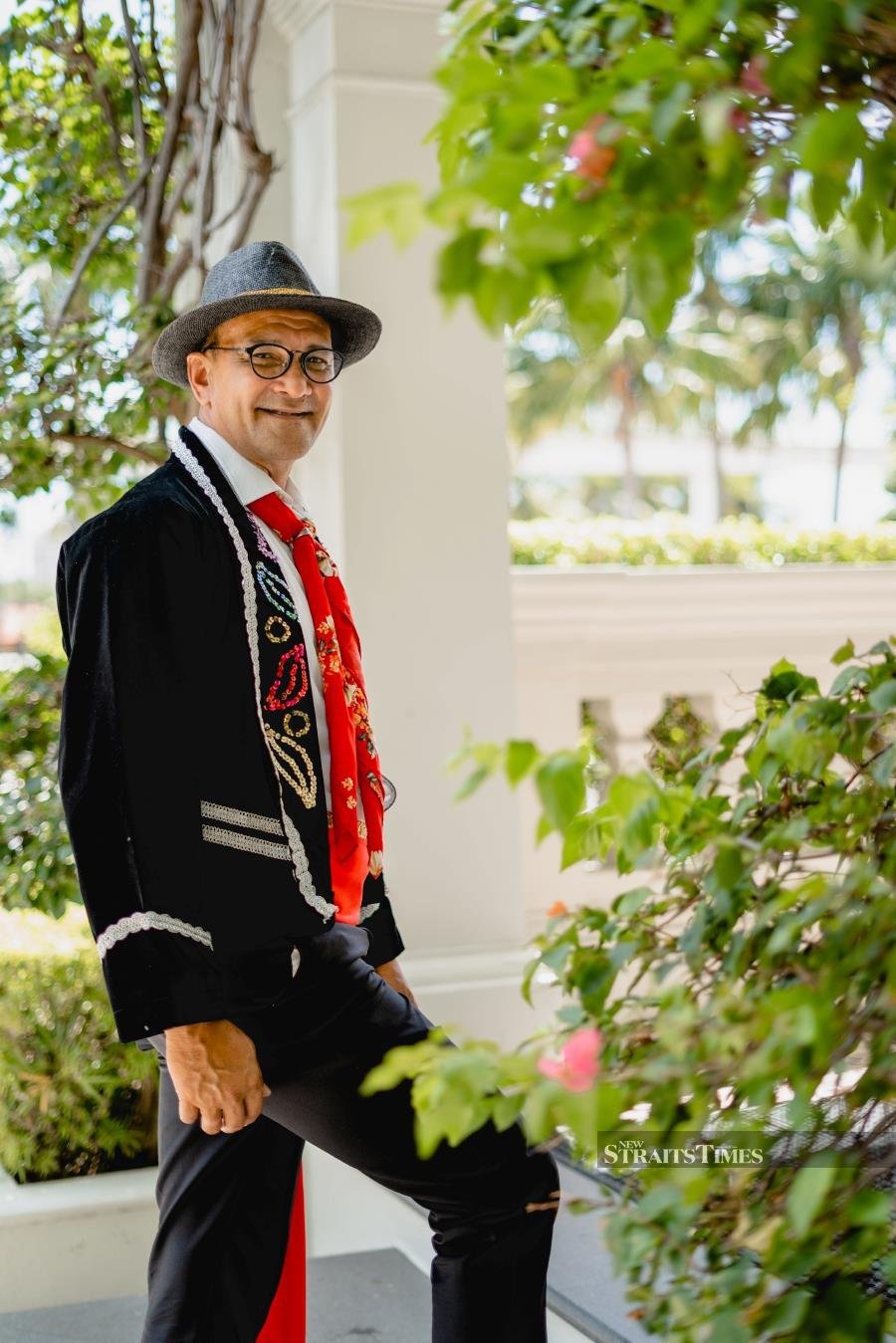
The Comprador and my guide, Alvin Kessler.
I’d been introduced to this affable gentleman, looking debonair clad in a traditional Portuguese ensemble of cropped black jacket with large white buttons, over a pair of dark pants and vibrant red neckerchief jauntily tied around his neck, the moment I waltzed through the hotel doors and checked myself in for my weekend sojourn. His eyes dance under his glasses when he elaborates: “It’s Portuguese-style fish stew cooked in coconut milk. Try it with rice!”
According to Kessler, in the past, fish used to be one of the staple items on the dinner table for the Portuguese community. This was hardly surprising as most of them lived near the sea and were fisher folks. Meat dishes tended to make an appearance during festive periods, such as Christmas and Easter.
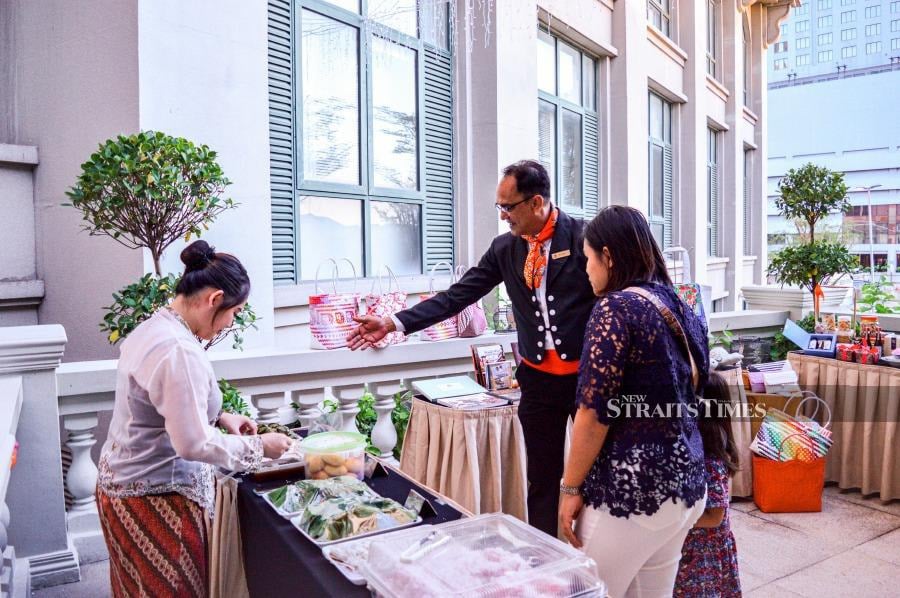
Local kueh are also sold at the Artisan Bazaar.
“For a household to be serving chicken or other types of meat dishes was quite something because back then, these things were pretty scarce,” recalls Kessler, before adding wryly: “These days, fish is becoming a luxury!”
Rooted in a 500-year-old legacy, Kristang cuisine is a fusion of many culinary styles, an ode to Melaka’s cosmopolitan past. Shares Kessler: “We have the Malay style of cooking, the Chinese, and Indian, as you can see from the fiery sambals, spicy curries and comforting stews that we cook. There are also influences from Portuguese, Dutch and British. Kristang cuisine generally emphasises on the freshest ingredients.”
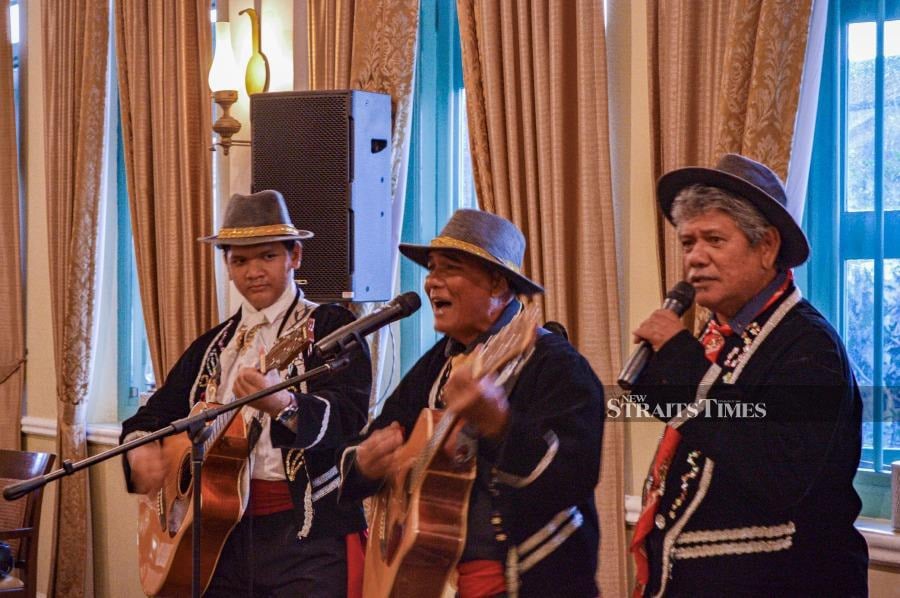
Be serenaded by Kristang songs.
As the melodious strains from a guitar begin to permeate the air and three costume-clad gentlemen take to the “stage”, I turn my attention back to my plate, reaching for more of the fish. “You know, growing up, the house would always have music playing, spices cooking and laughter all around,” muses Kessler softly. “It was always lively. I really hope that those joining us for our Kristang Night here would also get to experience that sense of vibrancy that I felt growing up.”
TO MARKET, TO MARKET
Off to the market.
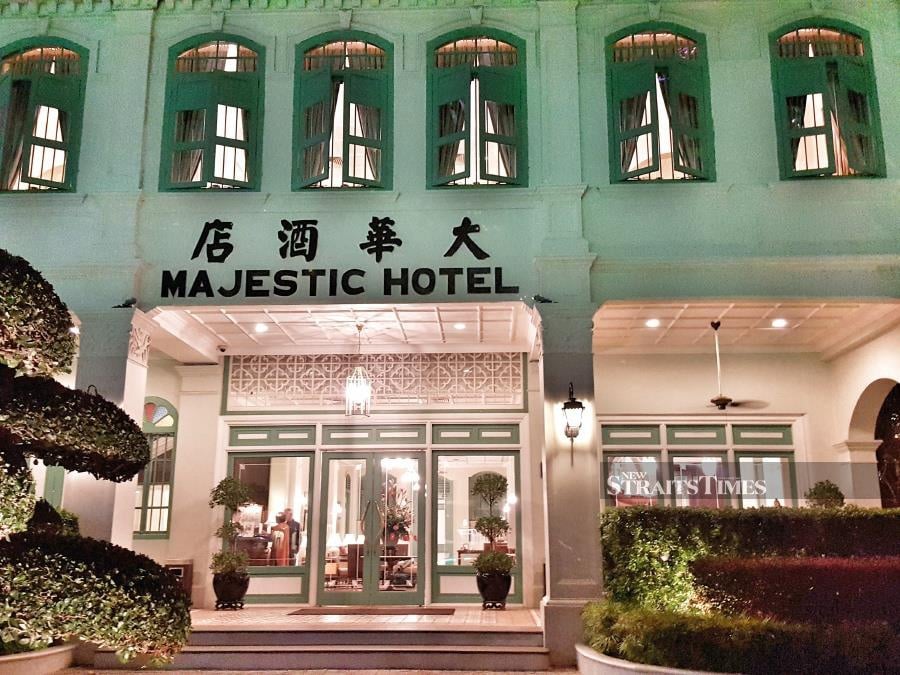
It’s a beautiful morning. The sky is a brilliant blue and there’s just a hint of a breeze in the still-crisp air. The melodic strains from the night before are still ringing in my ears as I wait by the hotel’s steps for my trip to the market as part of the Kristang Culinary Journey itinerary, which is available upon request.
This is the perfect opportunity for guests, especially foreigners, to not only get the chance to experience a typical morning market bustle, but also to get acquainted with our local produce as well as the herbs and spices commonly found in the Kristang kitchen.
“Are you ready? You can come in my car,” Kessler’s voice suddenly interrupts my thoughts and I find his smiling face looking expectantly at me. His car is already parked in the courtyard, ready for our morning jaunt.
The short drive to the Pasar Besar, located just off Batu Berendam turns out to be an enlightening affair as Kessler happily regales me with stories about his beloved hometown. “Do you know that Melaka used to be a sleepy hollow back in the 70s, 80s and even 90s?” he poses, looking at me through the car’s rear view mirror. “By 8pm, everything’s dead. It was only when the tourism drive started and hotels began sprouting up that Melaka became alive.”
The former mansion-turned-hotel.
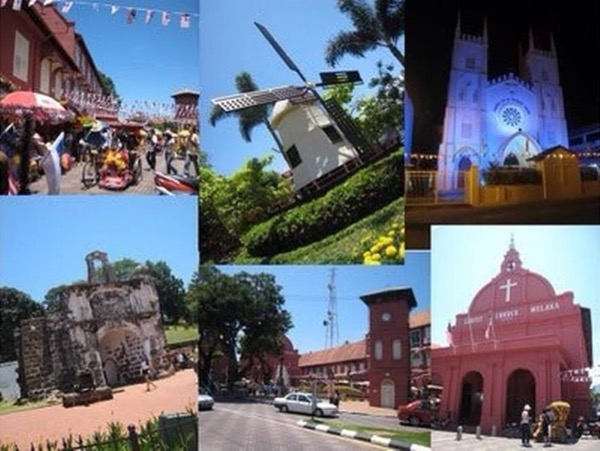
The drive continues somewhat uneventfully until my delighted exclamation over the fact that there are so many beautiful churches and chapels in Melaka. I’d just spotted a charming white-washed church to my left just as the car skids to a stop at the traffic light.
“Do you know that from 1511 until 1641, while under Portuguese rule, Melaka was described as a Christian town? Every street had a Roman Catholic church or chapel,” shares Kessler, before hurriedly stepping on the gas as the light turns green. “The oldest functioning Roman Catholic church in Malaysia is the St Peter’s Church in Melaka City.”
Soon, a bright blue signboard bearing the words Pasar Besar Majlis Bandaraya Melaka Bersejarah comes into view and I note a sprawling complex ahead of me. The car slows down as Kessler attempts to locate a parking spot before eventually grinding to a halt not far from the entrance. “Come, let’s go explore!” exclaims my jovial guide as he leads me into the inner sanctum of what appears to be a bustling market.
“Cencaluk kak,” a tudung-clad woman hollers merrily in my direction, inviting me to sample this Melaka (and also Penang) specialty comprising fermented small shrimps or krills usually served as a condiment with chillis, shallots and lime juice. “Sedap makan dengan nasi panas (nice to eat with piping hot rice),” she cajoles, before moving on to another unsuspecting customer as she notes the apologetic wave of my hand.
JOURNEY TO REMEMBER
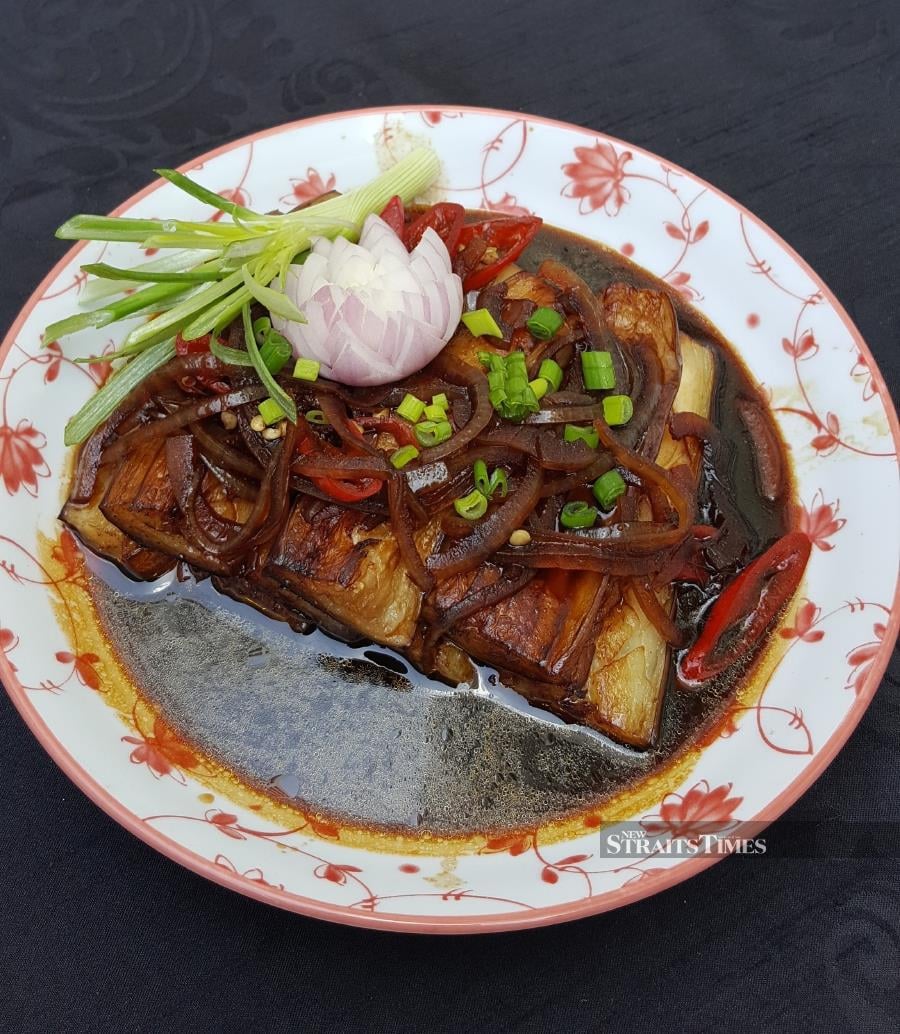
Soy Limang Terung.
Weaving my way around the tight grid of aisles, well demarcated according to produce, I stop occasionally to scrutinise the freshness — and unusualness — of some of the things being sold here at this market.
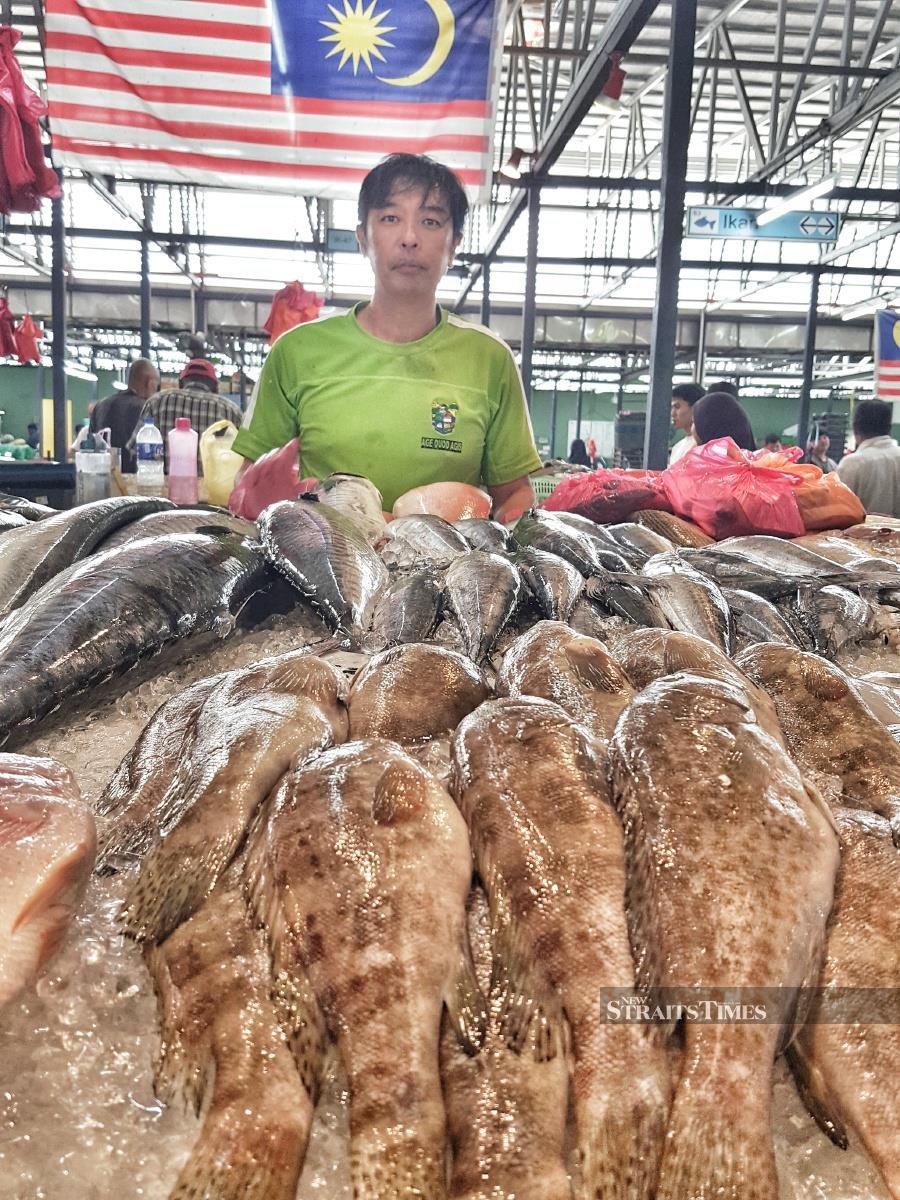
Buckets of eels, slithering menacingly in the murky water, elicit a shudder from me — and a chuckle from Kessler. Further on, there are less gruesome fish as well as other more familiar meats on display, and I hasten my strides. “Let’s go to the other side where the fruits and vegetables are,” beckons Kessler and I happily nod my agreement.
Wandering together in companionable silence, Kessler eventually stops at a stall selling what looks like unusual shiny dark nuts. “Do you know what this is?” he asks, eyes dancing at my confusion. “Ever heard of buah keluak?” And again, I stare at him in bewilderment.
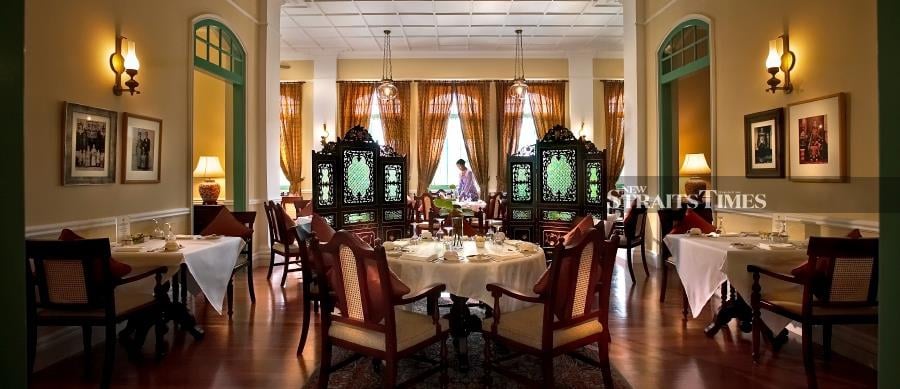
The Mansion restaurant.
Dubbed “Black Gold”, buah keluak or kepayang fruit is actually the seed of the kepayang tree (Pangium edule). It’s often associated with the cuisine of Melaka’s Baba Nyonya community, for example the famous Nyonya dish, Ayam Buah Keluak (braised chicken in black nut curry). The flesh, says Kessler, has a creamy, slightly bitter and discernibly earthy taste.
Moving on, the rest of our visit through the market is pleasant enough and I marvel silently at just how clean it is compared to many wet markets I’ve frequented in the Klang Valley. An elderly lady, complete with a toothy grin and framed by many “species” of bananas from where she’s sat perched on a stool, waves at me to come and buy something. I oblige, much to her delight, parting with some small change for a modest bundle of Pisang Mas (Lady Finger banana).
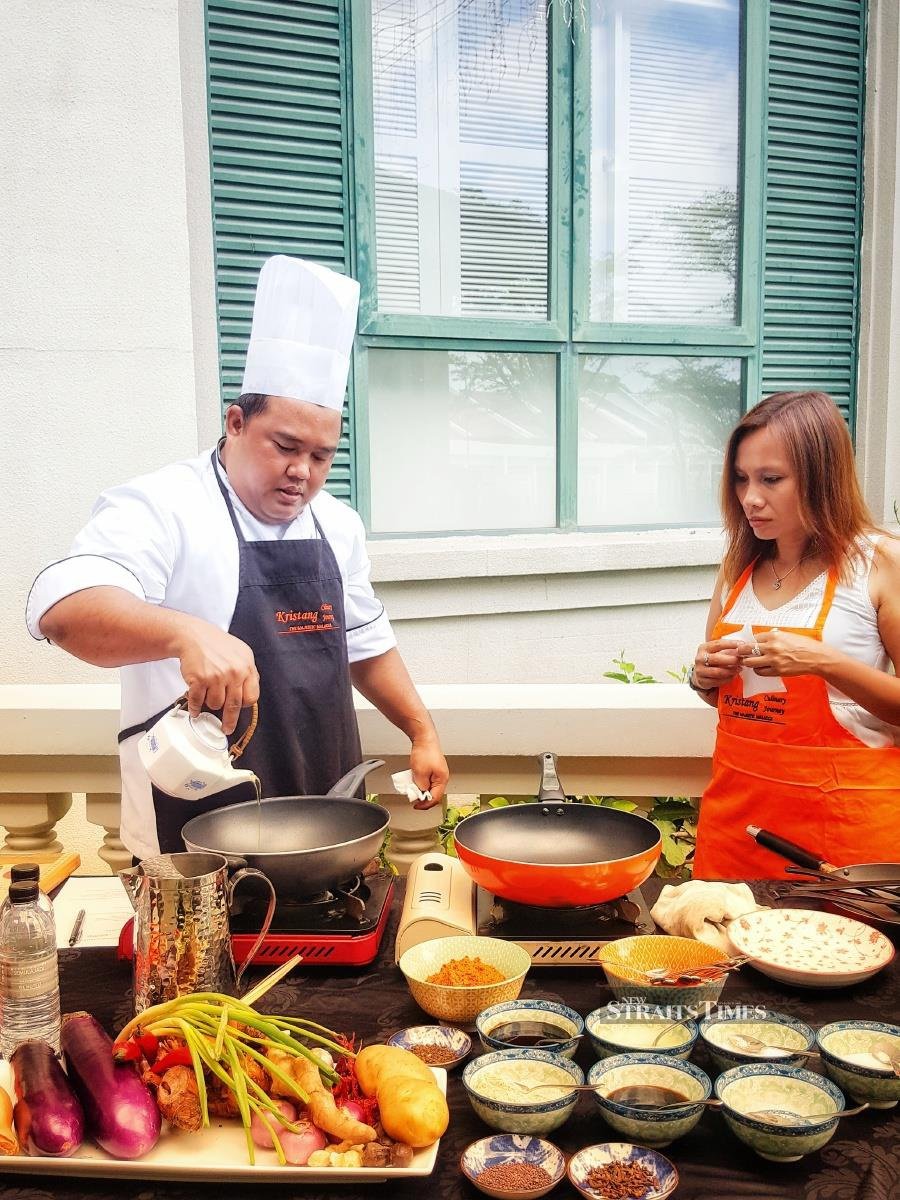
Kristang cooking class in session.
“Come, it’s time to go now. You’ve got your cooking class back at the hotel,” reminds Kessler, as I mischievously offer him a banana. That’s right; the Kristang Culinary Journey culminates in a private cooking class conducted by one of the hotel’s chefs where guests get to don aprons and try their hands at cooking signature Kristang dishes such as Kari Debal and Soy Limang Terung (pan fried eggplants in soy and lime gravy).
Having sampled an amazing array of Kristang dishes and delicacies, and enjoyed an insightful window into Kristang culture, a cooking class, which incidentally culminates in feasting on one’s culinary creations, seems like the perfect ending to my Majestic Kristang weekend!
Dates for Kristang Night at The Majestic Malacca are April 11 and May 23. For bookings or enquiries, email travelcentre@ytlhotels.com.my or call 03 27831000/062898000

' x='0' y='0' height='100%25' width='100%25' xlink%3Ahref='data%3Aimage/jpeg;base64,/9j/4AAQSkZJRgABAQAAAQABAAD/2wBDABALDA4MChAODQ4SERATGCgaGBYWGDEjJR0oOjM9PDkzODdASFxOQERXRTc4UG1RV19iZ2hnPk1xeXBkeFxlZ2P/2wBDARESEhgVGC8aGi9jQjhCY2NjY2NjY2NjY2NjY2NjY2NjY2NjY2NjY2NjY2NjY2NjY2NjY2NjY2NjY2NjY2NjY2P/wAARCAAGAAkDASIAAhEBAxEB/8QAFgABAQEAAAAAAAAAAAAAAAAAAAQF/8QAHBAAAgMAAwEAAAAAAAAAAAAAAQIAAxEEBRVS/8QAFQEBAQAAAAAAAAAAAAAAAAAAAwT/xAAZEQEAAgMAAAAAAAAAAAAAAAABAAIDESH/2gAMAwEAAhEDEQA/AMazqjyq0FZRWrGHRmybx2+1iJNbJYDTFQXs/9k='%3E%3C/image%3E%3C/svg%3E)